
Aronia vs blueberry comes down to concentration versus ease. Aronia berries are darker, far more tart and richer in anthocyanins, the purple plant pigments both fruits share. Blueberries are sweeter, milder and easy to eat by the handful. Most people enjoy blueberries as food and take aronia as a small daily juice shot.
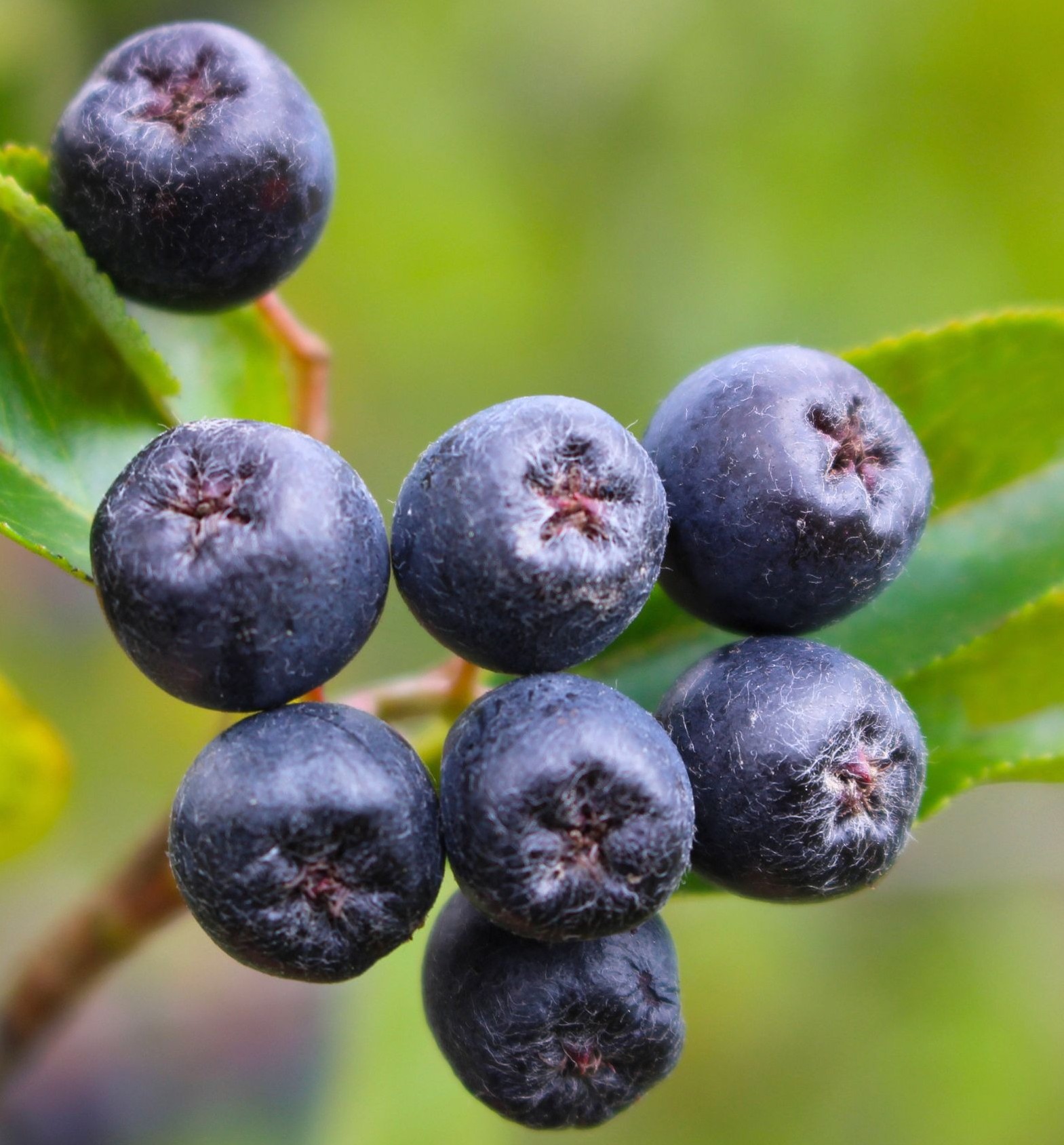
At first glance, both berries have a deep blue-purple colour, and both turn up on lists of colourful, polyphenol-rich fruit. However, they behave very differently in the kitchen and in a daily routine. This guide compares them side by side: pigments, taste, sugar, processing and the simplest ways to use each one. It also answers the questions we hear most often from customers who are deciding between the two.
Aronia vs Blueberry at a Glance
| Aronia berry | Blueberry | |
|---|---|---|
| Colour | Deep purple-black | Light to medium blue-purple |
| Taste | Very tart, dry and astringent | Mild, sweet-tart |
| Eaten fresh? | Rarely; usually juiced or dried | Yes, by the handful |
| Typical serving | 1 oz (30 mL) juice shot | A cup of berries or a glass of juice |
| Common juice style | Pure, no added sugar | Often sweetened or blended |
| Grown in Canada? | Yes | Yes |
In short, blueberries win on taste and convenience. Aronia, on the other hand, wins on depth of colour and concentration per sip.
Aronia vs Blueberry: Pigments and Antioxidant Compounds
First, both fruits get their colour from anthocyanins. These are water-soluble pigments in the larger polyphenol family, and they give many berries, grapes and red cabbage their blue and purple shades. The darker the fruit, the more of these pigments it usually holds.
Aronia stands out here. In a United States Department of Agriculture study of more than 100 common foods, chokeberry (aronia) had the highest total anthocyanin content measured, at about 1,480 mg per 100 g of fresh fruit. Blueberries are a good source too, but aronia is simply a denser one. That near-black colour is the visual sign of it.
Keep the comparison in proportion, though. Pigment content tells you what is in the fruit. It does not tell you how your body will respond, and no single food replaces a varied diet with plenty of different fruit and vegetables. So the practical takeaway is simple: aronia is an easy way to add a very dark berry to a routine that already includes everyday fruit like blueberries.
Aronia vs Blueberry Taste: Sweet Snack or Bold Shot
For example, blueberry juice, especially the sweetened kind, has a mild, sweet-tart flavour that most people like straight away. Fresh blueberries are a classic snack, and kids eat them without being asked.
Aronia is the opposite personality. The berries are tart and astringent, with a dry, black-tea-like finish that comes from their natural tannins. Very few people eat a bowl of raw aronia berries for fun. That is why aronia is usually juiced and enjoyed in a small serving. Customers often describe pure aronia juice as somewhere between unsweetened cranberry juice and dry dark grape juice.
Still, many people who start with a 1 oz shot find that the tartness grows on them within a week or two. If it doesn't, there are easy ways to soften it, which we cover below.
Aronia vs Blueberry Juice: Read the Sugar Label
In the aronia vs blueberry comparison, this is where the two juices often differ most. Many blueberry juices and "blueberry juice drinks" on store shelves contain added sugar, other fruit juices or concentrates to balance the tartness and lower the cost.
AroJuice is different by design. It is 100% aronia berry juice, with no added sugar, no sweeteners and no preservatives. The tartness you taste is the berry itself. If you are keeping an eye on added sugar, a small serving of pure aronia juice is a simple, controlled option. For a quick guide to reading juice labels in Canada, see our article on how to read a juice label before you buy.
Aronia vs Blueberry Processing: Heat or HPP
Meanwhile, most shelf-stable juices are heat pasteurized. That is a safe and effective method, but heat can change the taste and character of the juice.
AroJuice is cold-pressed and then preserved with high pressure processing (HPP). HPP uses cold water pressure instead of heat, so the juice tastes closer to fresh-pressed without chemical preservatives. The trade-off is that HPP juice must stay refrigerated. To learn more, read HPP juice explained.
Aronia vs Blueberry: Which Is Better for Daily Use?
Neither berry is objectively "better". Instead, each one fits a different job:
- Choose blueberries when you want a berry to enjoy: on oatmeal, in muffins, in smoothies or as a snack.
- Choose aronia when you want a small, consistent, no-added-sugar addition to your morning, taken as a 1 oz shot.
- Use both for the easiest routine: everyday sweet berries plus one dark, concentrated shot.
Also, because aronia is so concentrated, a typical serving is 1 oz (30 mL), while blueberry juice is usually poured by the glass. As a result, one bottle of aronia juice lasts longer than its size suggests.
Easy Ways to Enjoy Aronia If You Love Blueberries
If blueberries are your comfort zone, these ideas make aronia easier to like:
- Blend them. Add 1 oz of aronia juice to a blueberry smoothie. The blueberries soften the tartness, and the colour gets even deeper.
- Top it up. Pour a shot of aronia over ice and top with sparkling water or a splash of apple juice.
- Mix the juices. Start with mostly blueberry juice and a little aronia, then shift the ratio over a few weeks.
- Swap in recipes. Use aronia juice in place of blueberry juice at half the amount, then adjust to taste.
For more ideas, see our aronia juice smoothie recipes and our guide to what aronia juice tastes like.
Frequently Asked Questions
Does aronia have more antioxidants than blueberry?
Aronia berries contain more anthocyanins, the pigments behind their colour, than blueberries. A USDA study found chokeberry had the highest anthocyanin content of the foods it tested. Both berries are good additions to a varied diet.
Is aronia juice sweeter than blueberry juice?
No. Aronia juice is much more tart and astringent than most blueberry juices, especially pure, no-added-sugar aronia juice like AroJuice.
Can I mix aronia juice and blueberry juice?
Yes. Mixing a little aronia into blueberry juice is a popular way to soften aronia's tartness while keeping a deep berry colour.
How much aronia juice should I drink?
Most people enjoy a 1 oz (30 mL) shot a day, on its own or mixed into water, juice or a smoothie. Follow the serving on the label.
Are aronia and chokeberry the same thing?
Yes. Aronia is the plant's botanical name, and black chokeberry is its common name. They are the same berry, and it is not related to the chokecherry.
Where can I buy pure aronia juice in Canada?
AroJuice is cold-pressed, HPP processed aronia berry juice from Ontario with no added sugar, sold online with delivery across Canada.
Ready to try the darker berry? Shop AroJuice, our pure no-added-sugar aronia berry juice.


